Pages

Wednesday, January 19, 2011

Why Didn't I Thought of That?: Pressed Chair

A design classic is born. London designer Harry Thaler just won first place in the [D3] Contest, a design competition for young designers, with his design aptly named Pressed Chair.
The chair is made from a 2.5mm-thick aluminium sheet with a relief pressed into the surface, which provides structural strength once the legs are bent into place.

Here's the word of the designer himself:


Pressed Chair is a pressed aluminium chair which has been bent into shape to form a super-light, stackable chair.


I wanted to create an elegant and simple chair from a single sheet of 2.5mm aluminium. By pressing structural elements into the 2 dimensional sheet, I was able to make a chair that pushes the limits of minimization and material. The chair, which is light enough to be lifted with only two fingers, is extremely strong without any external structural support. Instead decorative features pressed into the sheet provide the required strength once the chair is bent into shape.

As part of my aim to minimize everything, I have also created a stool from the areas of scrap surrounding the chair when it is being cut. The stool, unlike the chair, is not made from 1 piece, but three. It is held together by screws.

Now that's what we call aluminum roadkill!

Sunday, January 16, 2011

Featured Designer: Hella Jongerius

Even before Etsy and all the patchworks and handmades boomed, there was Hella Jongerius. Hella (1963) is from De Meeren, Holland and studied at the Academy for Industrial Design at Eindhoven. She firstly gained design fame as one of the members of the renowned Dutch design group Droog Design.
Soft Urn
Silicone

Folded Washtub
PU Rubber

Felt Stool
In 2000, she started on her own with the company name ‘JongeriusLab’ a Rotterdam-based company. There, she continues to make a highly unique collection of products including ceramics, textiles, tableware, and furniture.


Animal Bowls


Porcupine Desk

Embroidered Tablecloth

Frog Table
Her works deliberately show the traces of how they were made, embracing imperfections, "humanizing" the usual cold mass-manufactured products, and her trademark style of fusing industry and craft, high-tech and low-tech, traditional and the contemporary.
Camper

Repeat Sofa

Poof

Polder Sofa

Detail of Polder Sofa

Saturday, January 15, 2011

Davy Jones will Love this: The Octopus Chair


Yes, believe it or not, this is a chair by Spanish artist Maximo Riera, who probably had a dose of The Pirates of the Caribbean before having this eureka moment. Riera used a precise sculptural technique called CNC (computer numerical control) and compressed foam to get the look he wanted with the help of more than thirty professionals. Octopus Chair comes in limited edition and is finished entirely by hand.


This chair is an offspring of Riera's idea a to create a series of chairs all inspired by animals (The Animal Chairs) consisting of more than 15 different pieces. He started his project three years ago and it was finally completed in October 2010.


This chair is perfect for your home... that is if it's a museum or a theme park. This chair wasn't intended to be a utilitarian object on the first place but as a piece of art. And by the way we all got awed and creeped out by this work, Riera did a great job. Everyone's curious though on what the other pieces from his Animal Chairs collection look like. That includes a rhino, lion, whale, beetle,walrus and a lot more according to his website. Now that makes Simba excited!

Wednesday, January 12, 2011

Why Didn't I Thought of That?: The Dtile System

Just when we are used with tiles as mere covers for our bathrooms & kitchens, Dutch designers Peter Van Der Jagt, Erik Jan Kwakkel, and Arnout Visser of the Studio Dtile came up with the Dtile System. It's so brilliant yet so simple that we'll ask ourselves, "Why didn't I thought of that before?".

"The Dtile System is an integrative collection of tiles designed  for the seamless blanketing of spaces and objects,  with as much of an eye towards practicality as towards aesthetics."

Rounded, seamless edges replace the usual hard, angled corners


Gaskets, stove controls & hangers are integrated into Dtile.


Detail of the genius.


Indented Dtiles give space to snuggly fit a chopping board, 'Magnetic Dtiles' serve as knife holders, and Dtiles on the right perfectly hold a cookbook


Integrated Dtile Dish Drying Rack


Ceramic pots bulit-in directly at Dtiles


Dtile mortar. Perfection.


Dtile Chalkboard (see the integrated chalk holder)
I'm gonna die.


Tuesday, January 11, 2011

Yet Another Logo Hullabaloo: The Rio 2016 Olympic Logo


The logo for the 2016 Olympics in Rio de Janiero, Brazil was revealed on new year's eve 2011. It's designed by Fred Gelli's Rio-based Tátil agency who beat out almost 140 other competitors. Their victory though immediately received criticism for its uncanny resemblance to the logo of the not-profit Telluride Foundation in Colorado, USA.


C'mon, does this mean a drawing of people hugging and jumping kum-ba-yah is such a novel idea that no one should ever do it again? It's like when Paris Hilton tried to trademark the phrase, "Thats Hot" as if she's the first person to ever say it.


This will make Henri Matisse very very very furious then.


'The Dance" by Henri Matisse


Monday, January 10, 2011

Featured Designer: The Campana Brothers


The most prolific, and probably the most famous designers ever to hail from South America are the Campana Brothers. Humberto Campana studied Law, while his brother Fernando took-up Architecture. Nevertheless, their passion for the creative paved way for them to work instead in a joint studio at Sao Paulo, Brazil -- a sort of converted garage where they turn mundane objects into design pieces (or art if you may).

Favela chair

Vermelha chair

Even before all those upcycled-slash-recycled-slash-repurposed products came into trend, the brothers were probably one of the very firsts to do it by using discarded materials and wastes in their creations.

Anemonas chair
Sushi sofa


Their designs border in the arts and in the mass-produced. And in some instances, these products do not function as it should be at all. Nonetheless, they've made such a significant contribution to contemporary mass-manufactured products and limited-edition designs that we'll just let them be excused for doing so.


Corallo chair

Banquet chair

Blow-up basket


Lacoste

Their works are inspired by nature, the urban kitsch, and the Brazilian culture. From these churns out designs that bring out the beautiful in the ugly. Love them or hate them, it's just fascinating how they can turn waste objects into something unexpected, joyful and exuberant that genuinely shouts Brazil, as well as their loving yet frank social commentary on their beloved country.
Cipria sofa


Scrigno

Saturday, January 8, 2011

Head-scratching Designs of 2010

As we relish 2011, let's look back at last year's designs that made us scratch our heads and say, "whuuut?".

Just a disclaimer though: This list was based on negative comments garnered at design sites, as well as my own subjective mind, so not everyone will most likely agree. So let's get this rolling!


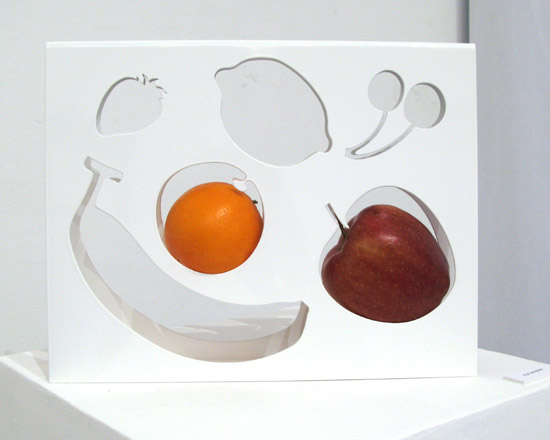
5. Fruit Template by Nendo


We cannot call a product design "good" if it doesn't serve the problem of function. And that applies with Nendo's Fruit Template. What if the apple is too big? Or we want to put a pineapple instead? Nendo has been great in their conceptual projects but this one is a miss because it's too conceptual for a fruit bowl. Oh, good thing only 100 pieces of this product was made. So only 100 filthy rich people can 'enjoy' this.


4. Nemo chair by Fabio Novembre


The minute it turned the corner, we know it's designed by Fabio Novembre. His Neo-Baroque and sensual style is always spot-on. This chair is perfect for modern-classic houses, or even for posh places.


Except that the designer forgot to consider the design of the front of the chair -- an alien of some sort that has a set of eyes so piercing it will haunt us in our dreams.


3. Cabana shelf by The Campana Brothers


This man-sized shelf covered with fireproofed raffia is one of the most talked about (and giggled at) at the 2010 Milan Design Week. Kudos to the Brazilian brothers for making this unique and ingenious shelf.


Imagine having this shelf in your home. Then one night, you get up to drink a glass of water. And from the dimly-lit room you stand, you can see a faint shadow of Cousin It of Adams Family peering from your living room. Yikes.


2. Gap Logo Redesign by Trey Laird of Laird and Partners


Tinkering a beloved 20-year old logo can be dangerous. That's what the Gap people realized after trying to give the old icon "a more contemporary, modern expression," as Gap spokesman Bill Chandler said. The new look so turned off consumers that sales of its Pure Premium line plunged 20%, prompting the company to scrap the packaging.


1. Chairless by Alejandro Aravena


Swiss furniture design giant Vitra made the biggest innovation at the 2010 Milan Design Week. That's because they produced the most minimal and modern chair ever to be made in design history. Enter Alejandro Aravena's Chairless chair.


Its ironic and quite amusing that a big furniture company produced a "non-furniture" product and celebrated the act of "sitting" itself instead of "seating".

Inspired by the nomadic Ayoreo Indians of Paraguay, " It’s a chair that’s not a chair, an action that has become a product", as Aravena himself describes, "When we want to drink we instinctively put our hands together and create a kind of bowl, when we want to see into the distance we put our hand above our eyebrows shading our eyes, and when we sit on the ground, we intuitively put our arms around our legs".

Great concept. Except that you'll look stupid sitting in it.